
 Imported Injections
 Oncology & Cancer Care
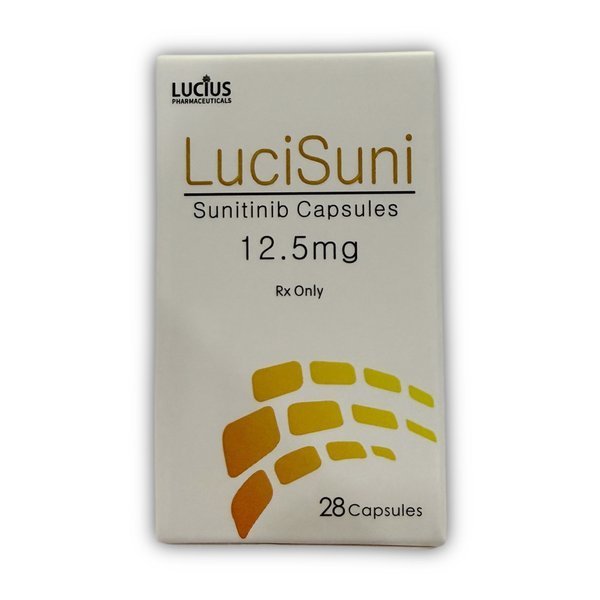
Sunitinib 12.5mg Capsule (LuciSuni)
Description
Sunitinib 12.5mg Capsule (LuciSuni) – Uses, Side Effects, Dosage & Price in Pakistan
Sunitinib 12.5mg Capsule (LuciSuni) is a prescription targeted cancer medicine containing sunitinib. It belongs to a group of medicines called tyrosine kinase inhibitors (TKIs). Sunitinib works by blocking specific signaling proteins that can contribute to cancer-cell growth and the development of blood vessels that supply tumors.
Sunitinib is used for selected cancers, including certain cases of gastrointestinal stromal tumor (GIST), advanced renal cell carcinoma (RCC), and progressive pancreatic neuroendocrine tumors (pNET). It is also used in specific patients at high risk of recurrent kidney cancer following nephrectomy, according to approved treatment guidelines.
The 12.5mg strength is an available capsule strength and may be used when a patient’s treatment requires dose adjustment. It should not be assumed that 12.5mg is the standard starting dose for every cancer indication. The dose and treatment schedule must be determined by the treating oncologist.
What Is Sunitinib 12.5mg Capsule (LuciSuni)?
Sunitinib 12.5mg Capsule (LuciSuni) contains sunitinib, a multi-targeted kinase inhibitor. It affects several receptor tyrosine kinases involved in cellular signaling, tumor growth, and angiogenesis.
Some cancers rely on these signaling pathways to continue growing and developing a blood supply. By inhibiting these pathways, sunitinib can help slow the progression of certain tumors.
The 12.5mg capsule can be particularly useful when an oncologist needs to reduce or adjust the patient’s dose because of side effects, treatment tolerance, or an individualized treatment plan. Official prescribing information recognizes 12.5mg dose adjustments for managing tolerability.
Sunitinib 12.5mg Capsule Uses
Sunitinib is prescribed for specific cancer conditions rather than for general cancer treatment.
Sunitinib for Gastrointestinal Stromal Tumor (GIST)
Sunitinib is used in adults with GIST after the disease has progressed on, or the patient has been unable to tolerate, imatinib treatment.
GIST is a type of tumor that develops in the gastrointestinal tract and may involve specific signaling pathways that support tumor growth. Sunitinib can inhibit some of these pathways and help control disease progression.
Sunitinib for Advanced Kidney Cancer
Sunitinib is used for advanced renal cell carcinoma (RCC). It interferes with signaling involved in tumor growth and angiogenesis and can help control cancer progression in appropriate patients.
Sunitinib for High-Risk Recurrent Kidney Cancer
Sunitinib may also be used as an adjuvant treatment in adults at high risk of recurrent RCC following nephrectomy, according to current U.S. prescribing information. The decision to use adjuvant therapy depends on the patient’s individual cancer characteristics and should be made by an oncology specialist.
Sunitinib for Pancreatic Neuroendocrine Tumors
Sunitinib is indicated for certain progressive, well-differentiated pancreatic neuroendocrine tumors (pNET) in adults with unresectable locally advanced or metastatic disease.
The treatment is intended to help control disease progression in appropriately selected patients.
How Does Sunitinib Work?
Sunitinib blocks several receptor tyrosine kinases that participate in signaling pathways involved in tumor growth and blood-vessel formation.
Its action may:
- Inhibit signals that encourage cancer-cell growth
- Reduce the development of new blood vessels supporting tumors
- Interfere with tumor-related signaling pathways
- Help slow progression of certain cancers
Because the medicine affects multiple pathways, it can also affect healthy tissues. This is why regular monitoring is an important part of treatment.
Sunitinib 12.5mg Dosage
The Sunitinib 12.5mg dosage is not the same for every patient. The appropriate treatment depends on the cancer being treated, previous therapy, overall health, response to treatment, and side-effect profile.
For example, current prescribing information lists 50mg once daily for the first four weeks of each six-week cycle for GIST and advanced RCC, while the recommended dosage for pNET is 37.5mg once daily. The 12.5mg strength can be used for dose modification when medically appropriate.
Therefore, patients should not start with 12.5mg simply because that is the capsule strength available. The treating oncologist should determine the complete dose and schedule.
How to Take Sunitinib
- Take the medicine exactly as prescribed.
- Swallow the capsule with water.
- It can generally be taken with or without food.
- Try to take it at approximately the same time each day.
- Do not change the dose without medical advice.
- Do not stop treatment on your own.
If you miss a dose, follow the instructions given by your doctor or pharmacist. Do not take an extra dose unless specifically instructed.
Sunitinib 12.5mg Side Effects
Sunitinib may cause side effects because it affects several signaling pathways in the body. Some patients experience mild effects, while others may require dose adjustment or temporary treatment interruption.
Common side effects can include:
- Tiredness or weakness
- Diarrhea
- Nausea
- Vomiting
- Reduced appetite
- Mouth sores
- Abdominal discomfort
- Headache
- Changes in taste
- Skin changes
- Hair-color changes
- Hand-foot syndrome
- High blood pressure
- Changes in blood-cell counts
The severity of side effects can vary from patient to patient.
Hand-Foot Syndrome
Sunitinib may cause redness, swelling, tenderness, pain, or peeling of the skin on the hands and feet. Patients should inform their healthcare provider if these symptoms become severe or interfere with walking or daily activities.
Changes in Blood Counts
Treatment can affect blood-cell counts. Regular blood tests may therefore be required to identify changes early and help the doctor decide whether treatment needs adjustment.
Serious Side Effects of Sunitinib
Sunitinib can cause serious adverse reactions, including severe liver toxicity and cardiovascular complications. Current prescribing information carries a boxed warning regarding hepatotoxicity.
Seek urgent medical attention if you develop:
- Severe or persistent abdominal pain
- Yellowing of the skin or eyes
- Unusual bleeding
- Severe weakness
- Chest pain
- Difficulty breathing
- Fainting
- Significant swelling
- Severe or persistent diarrhea
- Very high blood pressure
- Severe skin reactions
Tell your doctor promptly about any new or worsening symptoms during treatment.
Precautions Before Using Sunitinib
Before starting Sunitinib 12.5mg Capsule (LuciSuni), inform your doctor if you have:
- Heart disease
- High blood pressure
- Liver disease
- Kidney problems
- Thyroid disorders
- Bleeding problems
- A history of blood clots
- Previous heart complications
- Recent or planned surgery
Sunitinib can affect liver function, cardiovascular health, blood pressure, thyroid function, and blood counts. Your doctor may therefore arrange regular laboratory tests and other assessments during treatment.
Sunitinib and Liver Function
Liver toxicity is an important safety concern with sunitinib. Severe hepatotoxicity, including liver failure, has been reported.
Liver function tests are generally checked before treatment, during treatment cycles, and whenever clinically indicated. If significant liver abnormalities develop, the doctor may interrupt treatment, reduce the dose, or discontinue the medicine depending on severity.
Patients should immediately report symptoms such as yellow skin or eyes, dark urine, unusual bleeding, severe abdominal discomfort, or marked weakness.
Sunitinib and Heart Health
Sunitinib may affect cardiovascular function. Serious events such as heart failure, cardiomyopathy, myocardial ischemia, and reduced left ventricular ejection fraction have been reported.
Patients with a history of heart disease should tell their doctor before treatment. Depending on individual risk, the healthcare provider may assess heart function before and during therapy.
Sunitinib and Blood Pressure
High blood pressure is a recognized effect of sunitinib. Blood pressure should be monitored during treatment.
Patients with uncontrolled hypertension may require treatment of their blood pressure before or during sunitinib therapy. Severe hypertension requires prompt medical attention.
Sunitinib and Thyroid Function
Sunitinib can affect thyroid function in some patients. Your doctor may periodically check thyroid hormone levels during treatment.
Tell your healthcare provider if you experience unusual tiredness, unexplained weight changes, sensitivity to cold or heat, or other symptoms that could indicate thyroid problems.
Sunitinib Drug Interactions
Certain medicines can change the amount of sunitinib in the body. In particular, medicines that strongly affect the CYP3A4 enzyme may alter sunitinib exposure.
Tell your doctor about all medicines you take, including:
- Prescription medicines
- Over-the-counter medicines
- Vitamins
- Herbal supplements
- Other cancer medicines
Do not start or stop a medicine without discussing it with your healthcare provider.
Sunitinib, Pregnancy and Breastfeeding
Sunitinib may cause fetal harm. Patients who can become pregnant should discuss appropriate contraception with their healthcare provider before and during treatment.
Tell your doctor if you are pregnant, planning to become pregnant, or breastfeeding. Your healthcare provider will determine the safest treatment approach based on your circumstances.
Sunitinib and Surgery
Sunitinib may interfere with wound healing. Tell your doctor and surgeon if you are taking Sunitinib 12.5mg Capsule and have a planned surgical procedure.
Your healthcare team may recommend temporarily stopping treatment around surgery based on the type of procedure and your individual risk.
Monitoring During Sunitinib Treatment
Regular medical monitoring helps doctors identify side effects and determine whether treatment remains appropriate.
Monitoring may include:
- Blood pressure checks
- Complete blood counts
- Liver function tests
- Kidney function tests
- Thyroid function tests
- Electrolyte monitoring
- Assessment of heart function when indicated
- Evaluation for bleeding or clotting problems
- Assessment of treatment response
The exact monitoring schedule depends on the patient’s cancer and overall health.
How to Store Sunitinib 12.5mg Capsule
Keep Sunitinib 12.5mg Capsule in its original packaging and store it according to the manufacturer’s recommended conditions.
Keep the medicine:
- Away from excessive heat and moisture
- Away from unsuitable storage conditions
- Out of reach of children
- Protected in its original packaging
Do not use capsules that are expired or damaged.
Sunitinib 12.5mg Capsule Availability in Pakistan
The availability of Sunitinib 12.5mg Capsule (LuciSuni) in Pakistan may vary depending on imported stock, supplier availability, and current market conditions. Specialized oncology medicines may not always be available at every local pharmacy.
Patients looking for Sunitinib should confirm the exact strength prescribed by their oncologist before purchasing.
Impo Medic provides information and access support for specialized medicines in Pakistan. Patients can contact Impo Medic to check the current availability of Sunitinib 12.5mg Capsule (LuciSuni).
Sunitinib 12.5mg Capsule Price in Pakistan
The price of Sunitinib 12.5mg Capsule (LuciSuni) in Pakistan may vary depending on imported stock, supplier, packaging, product availability, and current market conditions. Because Sunitinib is a specialized prescription oncology medicine, its price may change when availability changes. Patients looking for the latest Sunitinib 12.5mg price in Pakistan can contact Impo Medic for current pricing and availability information.
The medicine should only be purchased with a valid prescription and used under the supervision of a qualified oncologist.
Why Choose Impo Medic?
Specialized oncology medicines can require specific strengths, reliable sourcing, and proper product information. Impo Medic provides information and access support for prescription and specialty medicines in Pakistan.
When looking for Sunitinib 12.5mg Capsule (LuciSuni), patients should confirm the product strength, packaging, and prescription requirements before ordering. The medicine should always be used according to the treatment plan provided by the treating oncologist.
Frequently Asked Questions About Sunitinib 12.5mg Capsule (LuciSuni)
What is Sunitinib 12.5mg Capsule used for?
Sunitinib is used for selected cancers, including certain gastrointestinal stromal tumors, advanced renal cell carcinoma, high-risk recurrent RCC in specific adjuvant settings, and progressive pancreatic neuroendocrine tumors.
Is 12.5mg the standard dose of Sunitinib?
Not necessarily. The recommended dose depends on the cancer being treated. For some approved indications, higher doses are used initially, while 12.5mg may be used as part of dose modification based on tolerability.
Can I take Sunitinib 12.5mg without a prescription?
No. Sunitinib is a prescription cancer medicine and should only be taken under the supervision of a qualified healthcare professional.
Can Sunitinib cause liver problems?
Yes. Sunitinib can cause serious liver toxicity, and liver function monitoring is an important part of treatment.
Can Sunitinib increase blood pressure?
Yes. High blood pressure can occur during treatment. Regular blood-pressure monitoring is recommended.
Can I stop Sunitinib if I feel better?
No. Do not stop or change your treatment without consulting your oncologist. Cancer treatment schedules are based on the patient’s diagnosis and response to therapy.
Is Sunitinib 12.5mg Capsule available in Pakistan?
Availability can vary according to imported stock and supplier availability. Patients can contact Impo Medic to check current availability of Sunitinib 12.5mg Capsule (LuciSuni).
How can I check the Sunitinib 12.5mg price in Pakistan?
The current price can vary according to product availability and supplier. Contact Impo Medic for updated pricing and availability information.
Who should prescribe Sunitinib?
Sunitinib should be prescribed and monitored by a qualified doctor, preferably an oncologist experienced in treating the patient’s specific cancer.
Medical Reference
For detailed prescribing information, including approved indications, dosage, warnings, precautions, interactions, and adverse reactions, healthcare professionals can refer to the current official Sunitinib prescribing information.


Reviews
There are no reviews yet.