
 Imported Injections
 Oncology & Cancer Care
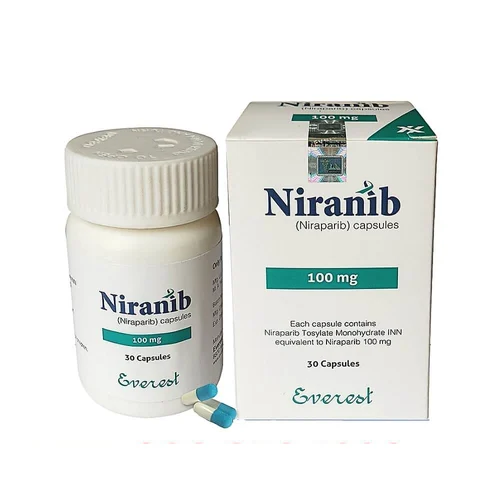
Niranib 100mg Capsule (Niraparib)
₨ 68,000
Description
Niranib 100mg Capsule (Niraparib) – Uses, Side Effects, Dosage & Price in Pakistan
Niranib 100mg Capsule (Niraparib) is a prescription anticancer medicine containing niraparib, a PARP inhibitor. It is used as maintenance treatment for certain adults with ovarian, fallopian tube, or primary peritoneal cancers after a response to platinum-based chemotherapy. The exact use depends on the cancer type, previous treatment, and the patient’s clinical condition.
Niranib 100mg Capsule is an oral medicine and should be taken only according to the prescription of an oncologist. Regular medical monitoring is important because niraparib can affect blood counts and blood pressure.
Niranib 100mg Capsule Used
Niranib may be prescribed for certain adult patients with:
- Advanced epithelial ovarian cancer
- Fallopian tube cancer
- Primary peritoneal cancer
- Recurrent disease following an appropriate response to platinum-based chemotherapy
- Certain advanced ovarian cancer settings following a response to first-line platinum-based chemotherapy
The exact indication can depend on the patient’s treatment history, cancer characteristics, and applicable prescribing information.
Niranib is generally used as maintenance treatment, meaning it is given after chemotherapy has produced a complete or partial response. It is intended to help maintain control of the disease rather than replace every type of initial cancer treatment.
How Niranib 100mg Capsule (Niraparib) Works
Niranib contains niraparib, which belongs to a class of medicines known as poly(ADP-ribose) polymerase (PARP) inhibitors.
PARP enzymes are involved in repairing damaged DNA. Cancer cells can depend on DNA-repair pathways to survive. Niraparib blocks PARP activity and interferes with the ability of certain cancer cells to repair DNA damage.
This can contribute to the death of susceptible cancer cells and help delay disease progression in patients for whom niraparib maintenance therapy is appropriate.
Because Niranib affects cancer-cell DNA repair, it is a targeted anticancer treatment rather than a traditional cytotoxic chemotherapy medicine.
Niranib 100mg Capsule Dosage
The appropriate Niranib dose is determined by the treating oncologist. The dose may depend on the patient’s indication, body weight, platelet count, previous treatment, kidney or liver function, and tolerance of the medicine.
For the 100mg capsule product information available through Pakistan’s DRAP, niraparib 100mg capsules are used as part of the prescribed daily dose. Some treatment regimens use 300mg once daily, which corresponds to three 100mg capsules.
Current prescribing recommendations may also use an individualized starting dose of 200mg or 300mg once daily in certain treatment settings. The starting dose can be affected by body weight and baseline platelet count.
Do not assume that every patient should take three capsules daily simply because each capsule contains 100mg. The oncologist should determine the correct dose for the individual patient.
How to Take Niranib 100mg Capsule
Niranib should be taken exactly as prescribed by your doctor.
- Swallow the capsule whole with water.
- Take it at approximately the same time each day.
- Niranib may generally be taken with or without food.
- Do not crush, chew, or open the capsule unless specifically instructed by a healthcare professional.
- Do not change the prescribed dose yourself.
- If you miss a dose, follow your doctor’s instructions rather than taking an extra dose.
Some patients may be advised to take niraparib at bedtime if nausea is troublesome.
Niranib is a prescription oncology medicine, so treatment should remain under regular medical supervision.
Niranib 100mg Capsule Side Effects
Niranib can cause side effects, although not every patient experiences them.
Commonly reported side effects of niraparib include:
- Nausea
- Fatigue
- Weakness
- Constipation
- Vomiting
- Headache
- Abdominal pain
- Decreased appetite
- Dizziness
- Insomnia
- Anemia
- Low platelet count
- Low white blood cell count
- Increased blood pressure
The severity of side effects can vary from patient to patient. Some adverse effects can be managed with supportive treatment or adjustment of the dose by the treating oncologist.
Serious Side Effects and Warnings
Niranib can cause significant decreases in blood-cell counts. This may result in thrombocytopenia, anemia, or neutropenia. Regular complete blood counts are therefore important during treatment.
Patients should contact their healthcare professional promptly if they experience:
- Unusual bleeding or bruising
- Persistent fever
- Severe weakness or tiredness
- Shortness of breath
- Symptoms of infection
- Severe or persistent headache
- Significant dizziness
- Symptoms associated with very high blood pressure
Rare but serious blood disorders, including myelodysplastic syndrome (MDS) and acute myeloid leukemia (AML), have been reported with niraparib treatment.
Niraparib can also cause hypertension, so blood pressure monitoring may be required during treatment.
Precautions Before Using Niranib
Before starting Niranib 100mg Capsule, tell your doctor about your complete medical history.
Your doctor should know if you have:
- Low platelet or blood-cell counts
- High blood pressure
- Kidney problems
- Liver problems
- Previous blood disorders
- A history of MDS or AML
- Previous serious reactions to anticancer medicines
- Pregnancy or plans to become pregnant
- Any other significant medical condition
Your doctor may perform blood tests before starting treatment and at regular intervals during therapy.
Because Niranib can reduce blood-cell counts, patients should not ignore unusual bleeding, persistent fever, severe weakness, or other signs of infection.
Niranib 100mg Capsule Drug Interactions
Tell your doctor about all prescription medicines, over-the-counter medicines, vitamins, and herbal supplements you are taking.
Your healthcare professional may need to review other medicines because some treatments can affect blood counts, blood pressure, liver function, or the overall safety of niraparib treatment.
Do not start, stop, or change another medicine without discussing it with your doctor.
Patients receiving multiple anticancer medicines should make sure that their complete treatment list is available to the treating oncologist.
Niranib During Pregnancy
Niraparib may cause harm to an unborn baby. Women who can become pregnant should discuss pregnancy prevention with their healthcare provider before starting treatment.
Patients who are pregnant, planning pregnancy, or think they may be pregnant should inform their doctor before taking Niranib.
Breastfeeding should also be discussed with the treating healthcare professional because niraparib treatment may require interruption of breastfeeding.
Pregnancy planning during cancer treatment should always be discussed with the treating oncologist.
Niranib Monitoring
Regular monitoring is an important part of Niranib treatment.
Before and during treatment, your doctor may monitor:
- Complete blood count
- Hemoglobin
- Platelet count
- White blood cell count
- Blood pressure
- Kidney function when clinically appropriate
- Liver function when clinically appropriate
- Overall response to cancer treatment
Blood-count monitoring is particularly important during niraparib therapy because decreases in platelets, red blood cells, and white blood cells can occur.
Your oncologist may adjust the dose, temporarily interrupt treatment, or discontinue therapy depending on laboratory results and the severity of adverse effects.
Niranib Storage
Niranib 100mg Capsule should be stored according to the manufacturer’s instructions printed on the original packaging.
Keep the capsules:
- In their original packaging
- Away from excessive heat and moisture
- Away from direct environmental exposure
- Out of the reach of children
Do not use Niranib after the expiry date printed on the package.
Patients should check the packaging before use and should not take capsules that appear damaged or unsuitable.
Niranib 100mg Capsule Price in Pakistan
The Niranib 100mg Capsule price in Pakistan may vary depending on the manufacturer, pack size, availability, supplier, import status, and current market conditions.
Oncology medicines can have changing availability in Pakistan, so patients should confirm the current product details and price before placing an order.
For current information about Niranib 100mg Capsule availability in Pakistan, patients can contact Impo Medic.
Before purchasing, confirm the medicine name, strength, packaging, expiry date, and storage conditions.
How to Buy Niranib 100mg Capsule in Pakistan
If you want to buy Niranib 100mg Capsule in Pakistan, it should be obtained from a reliable medicine supplier and used only under the supervision of a qualified oncologist.
Impo Medic can help patients check information and availability of Niranib 100mg Capsule in Pakistan.
Since Niranib is an oncology medicine, patients should confirm the exact strength and formulation before purchasing. Do not change from one niraparib product or strength to another without medical advice.
Patients should also avoid purchasing cancer medicines from unreliable sources because authenticity, storage conditions, and product quality are important for prescription oncology medicines.
Frequently Asked Questions About Niranib 100mg Capsule (Niraparib)
What is Niranib 100mg Capsule used for?
Niranib contains niraparib and is used as maintenance treatment for certain adult patients with ovarian, fallopian tube, or primary peritoneal cancer following an appropriate response to platinum-based chemotherapy.
Is Niranib a chemotherapy medicine?
Niranib is an anticancer medicine but is not a traditional cytotoxic chemotherapy drug. It belongs to the PARP inhibitor class and works by interfering with DNA repair mechanisms in cancer cells.
What is the usual Niranib 100mg dosage?
The dose depends on the patient’s cancer type, treatment history, weight, platelet count, and other clinical factors. Some niraparib regimens use 300mg once daily, while individualized starting doses of 200mg or 300mg may be appropriate in certain settings. The oncologist should determine the correct dose.
Can Niranib cause low platelets?
Yes. Low platelet counts, known as thrombocytopenia, are an important potential adverse effect of niraparib. Regular blood tests may therefore be required during treatment.
Does Niranib cause nausea?
Yes. Nausea is one of the commonly reported side effects of niraparib. If nausea is persistent or severe, patients should inform their healthcare professional.
Can Niranib increase blood pressure?
Yes. Niraparib can cause hypertension in some patients. Blood pressure monitoring may be recommended during treatment, particularly when clinically indicated.
Can I stop Niranib if I feel better?
No. Niranib should not be stopped, restarted, or dose-adjusted without medical advice. Maintenance treatment is continued according to the patient’s cancer status, treatment response, laboratory results, and tolerance.
Where can I check Niranib 100mg Capsule availability in Pakistan?
You can contact Impo Medic to check current availability and product information for Niranib 100mg Capsule in Pakistan.


Reviews
There are no reviews yet.